
I. The Silent Witness in the Refrigerator
Every Thursday night, my refrigerator becomes a silent witness. It bears witness to my Monday ambitions—the carefully selected ingredients, the things I vowed to turn into a “creative and nutritionally balanced dinner” by the end of the week—how, halfway through the week, they’ve become a slightly apologetic presence.
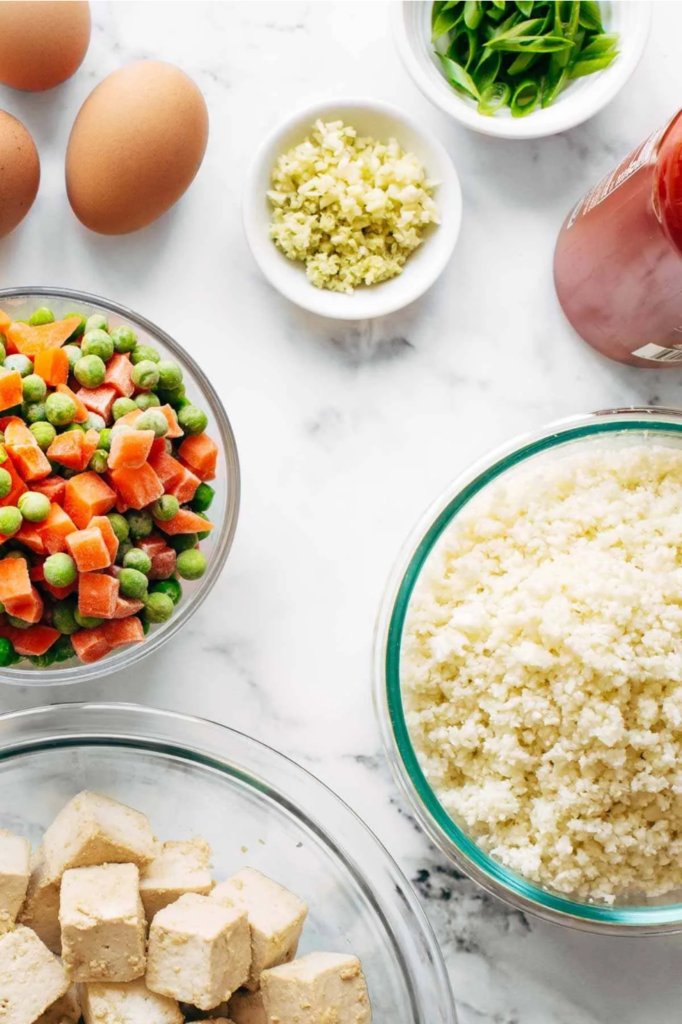
The cauliflower lies in the vegetable drawer, its skin already starting to yellow. Frozen peas and carrots are clumped together deep in the freezer. There’s also a carton of eggs and a block of tofu I bought last week, the date on the packaging issuing me an ultimatum.
This is the truth of life: we’re always separated from planning by a distance called “exhaustion.”
But it’s on nights like these that I learned to make a bowl of cauliflower fried rice. Not the kind that requires soaking rice a day in advance, preparing broth, and meticulous plating. But a kind of fried rice that can go from the refrigerator to the table, from chaos to order, in fifteen minutes. It doesn’t require you to be a chef, it only requires you to be yourself—someone who is hungry, tired, but still wants to eat something good.
II. The Awakening of Cauliflower Rice
When I first heard about “cauliflower rice,” like most people, I was filled with almost arrogant skepticism. Why chop up perfectly good cauliflower and pretend it’s rice? Isn’t this a double betrayal of both cauliflower and rice?
But when I first put small cauliflower florets into the blender, pressed the pulse button, and watched them turn into rice-sized pieces, I suddenly understood the essence of it all. This isn’t substitution; it’s transformation. Cauliflower isn’t pretending to be rice; it’s simply borrowing a form to make itself more palatable, faster to cook, and more generously infused with the flavors of other ingredients.
A bowl of cauliflower rice is essentially a bowl of vegetables. No soaking, no steaming, no “I forgot to cook the rice beforehand” frustration. You simply pour it into a hot pan, stir-fry it with garlic, ginger, and soy sauce for a few minutes, and it transforms from hard to soft, from pale to golden.
This process is almost absurdly fast. Five minutes ago it was a whole head of cauliflower; five minutes later, it’s edible “rice.” In this sense, cauliflower rice is a response to modern life: we want not slowness, but quality; not complexity, but richness.
III. The Crispness and Chewiness of Tofu
Tofu plays a subtle role in this dish. It can be the main ingredient or a supporting one, depending on your mood that day.
If you choose eggs—three beaten eggs, poured into a well in the center of the pan, and gently stirred until they become soft crumbs—then the tofu can step aside. The eggs give the fried rice that familiar, almost nostalgic golden color, and a reassuring feeling of fullness from the protein.
But if you want a plant-based version, or you just want to add another layer to the dish, tofu is the answer.
The key is to make the tofu crisp. Not the greasy, fried crispiness, but a golden-brown, caramelized crust from baking. Cut firm tofu into small cubes, mix with olive oil, soy sauce, and cornstarch, spread on a baking sheet, and bake in a preheated oven at 230 degrees Celsius. After twenty minutes—yes, a little longer than the fried rice itself, but you can do this while making the fried rice—you’ll have a batch of tofu cubes that are crispy on the outside and chewy on the inside.
The cornstarch is the secret. It forms a thin crust on the surface of the tofu, turning it golden and crispy at high temperatures, while the inside retains its satisfying elasticity and bean flavor. This contrast in texture—crispy crust and soft center—is the highlight of the whole dish.
When I first baked tofu this way, I could hardly believe my eyes. Before that, my impression of tofu had always been “healthy but boring.” But at that moment, it became something closer to a snack, something you’d take out of the fridge late at night and eat with your hands while standing in front of the stove.
IV. The Indispensable Supporting Roles
A good bowl of fried rice, like a good novel, needs supporting characters to highlight the main character.
Garlic and ginger are the narrative engine of this dish. The moment the chopped garlic cloves and grated ginger are sautéed in hot oil, the air in the entire kitchen changes. It’s a warm, slightly spicy aroma that tells you: something is happening, the flavor is taking shape.
Frozen peas and carrots are a compromise between convenience and nutrition. They don’t need peeling, dicing, or any preparation—just dump them directly from the freezer into the pan. But they bring more than just color—the green and orange accents make the whole bowl look meticulously prepared—there’s also a subtle sweetness that balances the saltiness of the soy sauce and the aroma of the sesame oil.
Soy sauce and Sriracha are two extremes of flavor. Soy sauce provides depth and umami, Sriracha provides heat and kick. You can adjust the ratio according to your tolerance, but I recommend not using too little of either. The soul of this dish lies in the interplay of saltiness, spiciness, and aroma; the absence of any one of these would render it bland.
Finally, chopped scallions. Small green pieces sprinkled on top of the bowl are like a postmark, adding a touch of sophistication. They’re not just decoration—the spiciness and fresh aroma of raw scallions provide a refreshing contrast to the steaming rice, creating layers of flavor in every bite.
V. The Fifteen-Minute Philosophy of Life
From chopping the cauliflower to serving the dish, the entire process takes about fifteen minutes. In those fifteen minutes, you don’t need any special skills, expensive equipment, or prior preparation.
All you need is a pot, a knife, a food processor (or a grater), and the willingness to get started.
This is the most important lesson this dish taught me: good food doesn’t necessarily require time. Time is a resource, but not the only one. Attention, willingness, and basic respect for the ingredients—these are equally important, if not more so.
In this sense, cauliflower fried rice is a form of resistance. It resists the myth that “healthy eating must be complex,” the prejudice that “fast food is necessarily inferior,” and the excuse that “cooking requires dedicated time and effort.”
It says: You can cook yourself a truly delicious meal on a weekday evening using leftovers from your fridge. You don’t have to order takeout, open fast food packaging, or sacrifice taste for convenience.
VI. The Wisdom of Meal Prep
If you want, this dish can go even further.
Put it in a glass container and refrigerate it. Keep the tofu separately in a small container, sprinkling it on before eating to maintain its crispness. This way, you’ve got your lunches sorted for the next three to four days.
Meal prep isn’t about control; it’s about freedom. When you know there’s a ready-made, delicious, healthy meal in your fridge, you’re freed from the tyranny of the lunch decision. You don’t need to make a choice when you’re hungry because the choice has already been made, and it was yours.
As it heats up, the aroma of garlic and sesame oil wafts from the microwave, drawing envious glances from colleagues in the office. At that moment, you’ll recall that Thursday evening, that tired but determined self.
VII. The End of a Bowl of Rice
When eating this bowl of rice, I like to sit by the kitchen window, watching the sky slowly darken. The first bite is always the most satisfying—the crispness of the tofu, the softness of the cauliflower, the creaminess of the egg, the freshness of the scallions, all blended together.
Then, as the bowl empties, the flavors slowly settle. You’ll begin to notice details you previously overlooked: the spiciness of the ginger lingers on the back of your tongue, the aroma of sesame oil lingers in your nasal cavity, the salty umami of the soy sauce leaves your entire mouth feeling satisfied.
This is the essence of eating. It’s not just about filling your stomach, but about experiencing a process—from anticipation to satisfaction, from chaos to order, from raw to cooked, from raw ingredients to a meal.
Cauliflower fried rice won’t appear on the menu of any high-end restaurant. It won’t win any cooking competition awards. It won’t even get you many likes on Instagram.
But it will appear in those moments when you need it most—when you’re tired, hungry, or feeling a little weary of life—and tell you: It’s okay, we still have this. We still have fifteen minutes, a pot, a head of cauliflower, and the ability to make a good meal.
That’s enough. It’s always enough.
Recipe: Cauliflower Fried Rice with Crispy Tofu
Crispy Tofu
- 450g firm tofu, squeezed dry and cut into small cubes
- 1 tbsp olive oil
- 1 tbsp soy sauce
- 1 tbsp cornstarch
Preheat oven to 230°C. Toss the tofu with olive oil, soy sauce, and cornstarch, and spread on a baking sheet lined with parchment paper. Bake for 20 to 30 minutes, turning once halfway through, until golden brown and crispy.
Cauliflower Fried Rice
- 1 medium-sized cauliflower, chopped into small florets
- A little olive oil
- 2 cloves garlic, minced
- 1 small piece ginger, grated
- 2 to 3 cups frozen peas and carrots (or any vegetables you like)
- A little soy sauce
- A little Sriracha sauce
A little sesame oil
- 3 eggs, beaten (or substitute with fried tofu for a vegan version)
- Chopped green onions, for garnish
- Place the cauliflower florets in a food processor and pulse until finely chopped like rice grains.
- Heat olive oil in a pan over medium heat. Add garlic and ginger and sauté until fragrant.
- Add the frozen vegetables and stir-fry until they begin to steam.
- Add the chopped cauliflower, soy sauce, and Sriracha sauce. Stir-fry quickly for one or two minutes, until the cauliflower softens slightly but still retains its crispness.
- Make a well in the center of the pan and pour in the sesame oil and beaten eggs. 6. Gently stir to break up the eggs into small scrambled pieces in the center, and mix well with the fried rice once cooked through.
- Transfer to a bowl, sprinkle with chopped green onions, and top with the toasted crispy tofu. Drizzle with a little Sriracha chili sauce if desired.